

Starting this month, moviegoers can rediscover the work and vision of a groundbreaking Iowa journalist and artist from the turn of the 20th century—thanks to a modern Iowa filmmaker’s first full-length feature.
It all began Dec. 1, 1900, with what the Des Moines Daily News called a “foul murder” south of Indianola: “A farmer named (John) Hossack was struck over the head and killed by unknown parties.”
The next day’s follow-up deepened the mystery and sketched a scene both intimate and inexplicable:
“There is no evidence of burglary. The murderer came through a porch and front room to the bed room where Mr. and Mrs. Hossack slept. He evidently reached across the bed with an ax and struck two blows. One crushed in the skull and the other made a deep cut, yet Hossack lived from Saturday night until 10 a.m. Sunday, though he did not regain consciousness, and no one has yet been found who can give a clue to the murder. The ax was found under a shed about fifty feet from the house. Mrs. Hossack swore before the jury that she was awakened about midnight by the slamming of a door, saw a flash of light and then all was dark. She called to her husband but as he did not respond, she got up and lighted a lamp. Then she discovered him on the bed, with blood all over the clothing. She said she did not hear the blows nor see any one. The officers are investigating.”
Eventually, the officers focused their suspicions on Hossack’s wife, Margaret.
A talented and ambitious 24-year-old reporter—a Davenport native and Drake University alum named Susan Glaspell—covered the case from the grisly discovery through the initial conviction of Margaret. When the Iowa Supreme Court overturned that verdict and a retrial ended in a hung jury, the murder became one of Iowa’s signature unsolved crimes. Margaret, who always insisted she was innocent, died in Indianola in 1916.
Ever since, the unsolved murder has been creative fuel for generations of storytellers—starting with Glaspell herself.
By 1916, she was living in New York City’s Greenwich Village and spending summers performing with the Provincetown Players in Provincetown, Massachusetts—the country’s first modern American theater company, which she co-founded. (A young Eugene O’Neill got his start there.)
Drawing on the Hossack case—the defining story of her news career—Glaspell wrote “Trifles,” a fictionalized one-act play that premiered in Provincetown in 1916, just days before Margaret Hossack’s death. The play eventually earned a reputation as an influential early feminist drama.
The next year Glaspell published a short story version, “A Jury of Her Peers”—the title a more explicit nod to how women were excluded from local power structures, including in the courtroom.
In other words, in the years before the 19th Amendment was ratified in 1920, finally recognizing women’s right to vote, Glaspell crafted an intimate story of family and gender dynamics that has remained relevant from the era of the telegraph to the era of the iPhone.
Iconic director Alfred Hitchcock turned to Glaspell’s story for a 1961 episode of his popular TV series.
A 30-minute movie adaptation of “A Jury of Her Peers” in 1980 was nominated for an Academy Award for Best Live Action Short Film.
The original murder was explored in a deeply researched book, “Midnight Assassins: A Murder in America’s Heartland,” published in 2007 by married co-authors Patricia L. Bryan and Thomas Wolf.
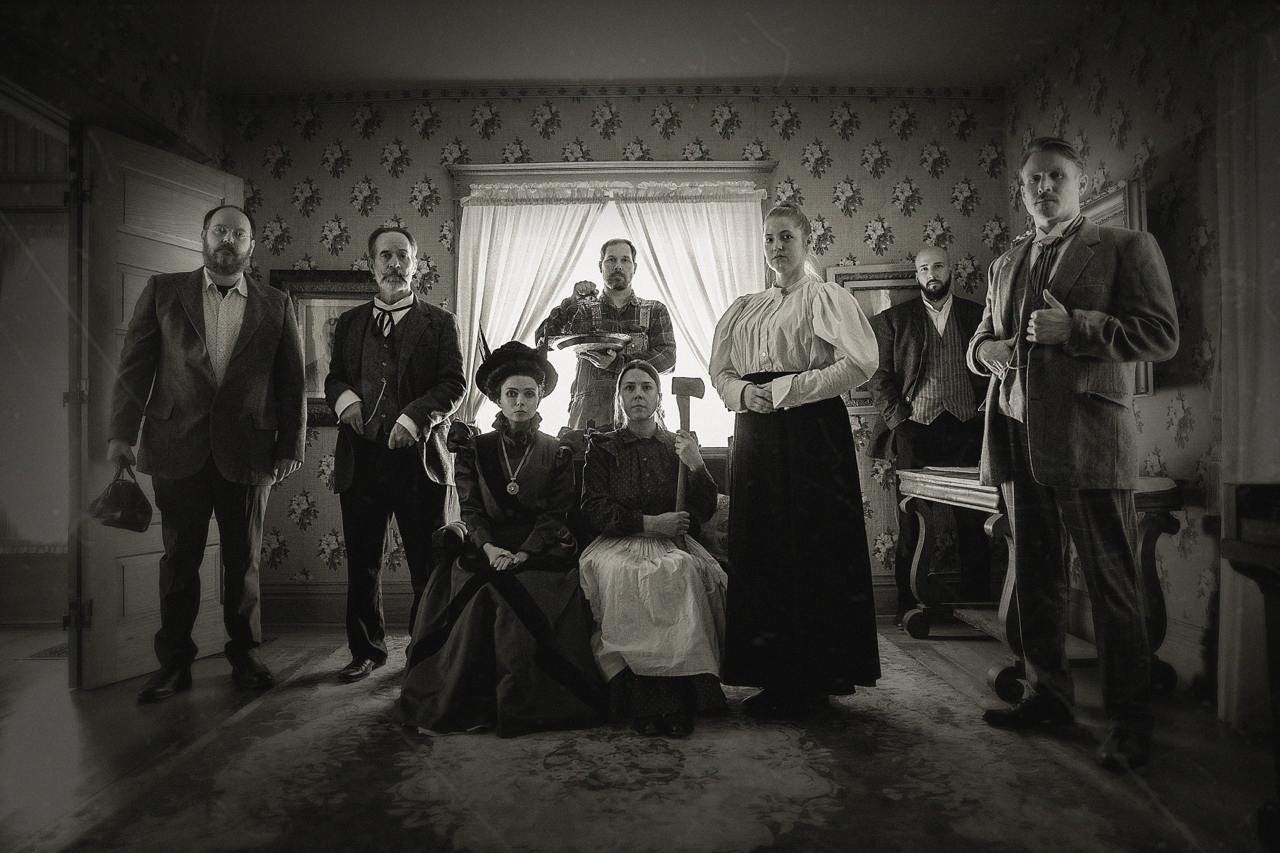
Now, 125 years after the killing, an Iowa cast and crew has brought “A Jury of Her Peers” back to life in a film with its world premiere Dec. 12 at Fleur Cinema & Café in Des Moines.
Des Moines actor Stephanie Schneider portrays Dora Hale in the film—a neighbor who helps drive the plot with her own furtive investigations. It’s the same role Glaspell chose for herself when “Trifles” premiered.
“I think it’s important to show how far we’ve come and yet how far we haven’t come in 125 years,” Schneider said of the story’s themes. “There are a lot of the same struggles day to day, and I think this story really speaks to women coming together as friends and building a united front.”
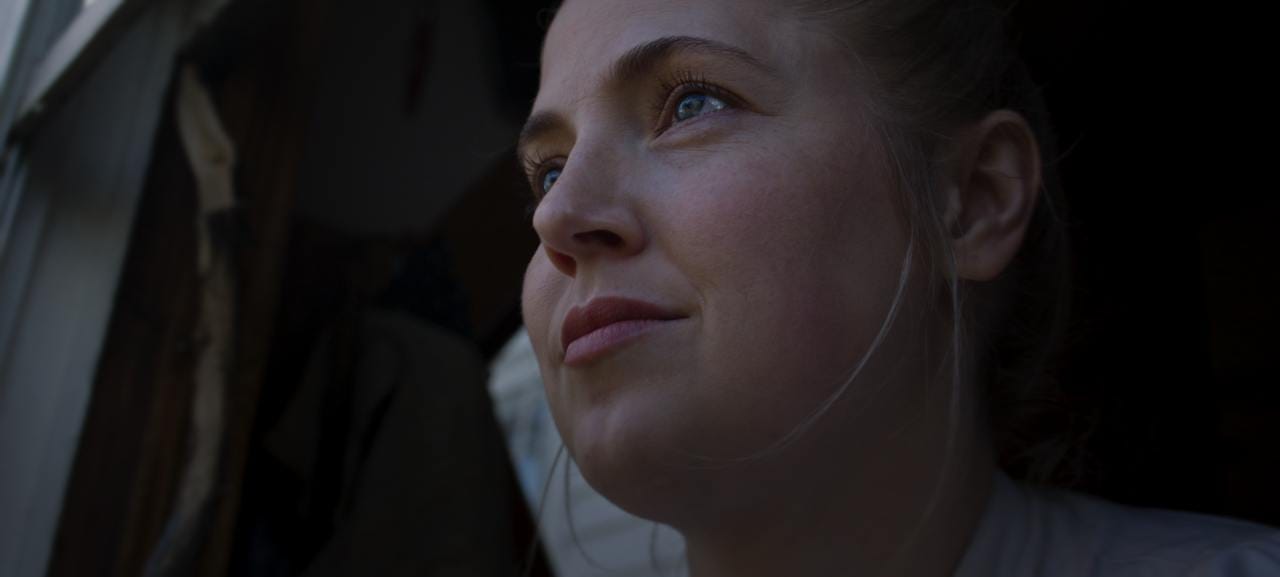
A storyteller who learned ‘literally everything’ from his first film
Sitting across from filmmaker William Rock, the driving force behind the latest version of “A Jury of Her Peers,” I felt a little ashamed that until now I had never encountered the life and legacy of Glaspell.
She wrote at least 50 short stories, nine novels, and 15 plays—including her 1930 play “Alison’s House” that won a Pulitzer Prize.
Rock, 43, is a seasoned screenwriter who has also built an acting resume in local theater. His partnership with cinematographer John Hansen, forged through the 48 Hour Film Project, became foundational to the new movie.
When I ask whether Rock sees himself primarily as a writer, director, or producer, he shrugs off those labels in favor of the broader “storyteller.”

He wore nearly all the storyteller hats on this project—including acting, as “the crazy neighbor.”
But most of his time was spent producing, which meant constant problem-solving.
“Every time I’ve thought we’ve done the hard part,” Rock said, “every time I’ve been wrong.”
What did the experience teach him about filmmaking?
“Literally everything,” he said.
Rock’s journey began in the summer of 2020 when he drove his sons (now 16, 14, and 8) to a camp south of Indianola. Passing through the tiny unincorporated community of Medora—three houses and a church—he felt a tug of history-nerd curiosity. One Google search led to another, and soon he was immersed in the Hossack case and the story of Susan Glaspell.
Rock admits he’s “a sucker for an underdog.” Glaspell fit easily: a young woman covering crime and politics at a time when few women did, a founding voice in American theater, and a writer who climbed from obscurity to national acclaim.
Four years later, Rock shot a proof-of-concept trailer and fully committed to making the film.
Then he shot it on a period-perfect Iowa farmstead in 23 days—weekends spread over four months—with a cast and crew of about 60.
One crew member had a singular job: mixing fake blood for the corpse. When Rock was handed a Mason jar of the unsettlingly realistic mixture, he tasted a tiny dab just to be sure it was safe. He was relieved to detect cocoa powder.
“I still haven’t met him in person,” Rock said of his blood-maker.
Besides Glaspell, Rock drew influence for the film from Rian Johnson’s wonderful and witty “Knives Out” franchise. His advice to viewers: “Pay attention to what people aren’t saying.”
After its Des Moines premiere, “A Jury of Her Peers” travels to Davenport, Albia, Ida Grove, Corning, and beyond.
When I asked whether he intends to make more films, Rock was quick to say he’s already writing his next project—a blend of horror and comedy.
“If you’re thinking R-rated ‘Ghostbusters,’ you’re pretty close,” he said.
As 20th century influences go, that’s quite a departure from Glaspell’s intimate family drama.
Rock’s budget for his second film may need to account for more than one Mason jar of fake blood.
Iowa Writers’ Collaborative
I’m proud to be a member of the Iowa Writers’ Collaborative. Meet our writers here, or subscribe to our free weekly roundup and our Wednesday “Flipside” edition featuring sports, music, culture, and other topics.