

I can understand the inclination to stray 252,756 miles into space, given all the conflict and turmoil currently raging here on the surface of the earth. Time for a vacation and some peace and quiet—with no destination quieter than the cold vacuum of space.
Earlier this week, President Donald Trump vaguely threatened, “A whole civilization will die tonight, never to be brought back again. I don’t want that to happen, but it probably will.”
Meanwhile, the NASA crew of Artemis II—Reid Wiseman (commander), Victor Glover (pilot), and mission specialists Christina Koch and Jeremy Hansen—meticulously traced the precise path of their lunar flyby to the farthest point reached by any human (252,756 miles). Along the way they wielded a trusty old Nikon camera to snap gorgeous photos of our fragile blue orb—reminding us that what qualifies as a “whole civilization” depends on your perspective.
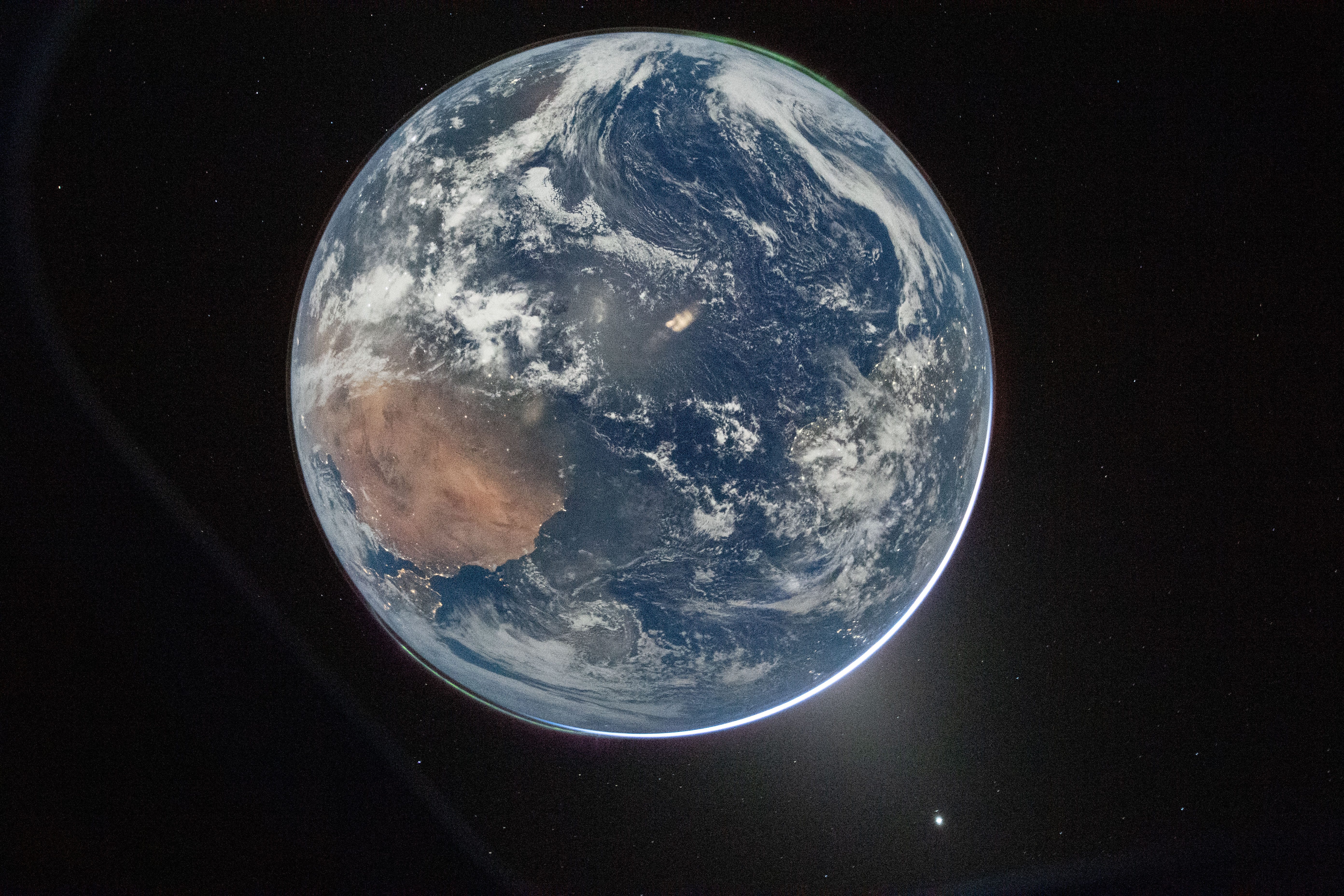
When we’re fixated on the fossil-fuel artery of the Strait of Hormuz—no more than 24 miles wide at its narrowest point—it’s easier to imagine we’re entirely different civilizations sprinkled across the continents, strangers to each other.
From the billions of light years of the vastness of space, however, we see how insignificant and vulnerable we really are as a species—a single speck of a civilization floating among infinity. And mere oil won’t get us where we need to go in the next century to ensure our survival.
Wiseman’s recent image of the whole earth was the first time a human has captured that humbling view since December 1972 when Apollo 17 snapped the classic “Blue Marble” photo.
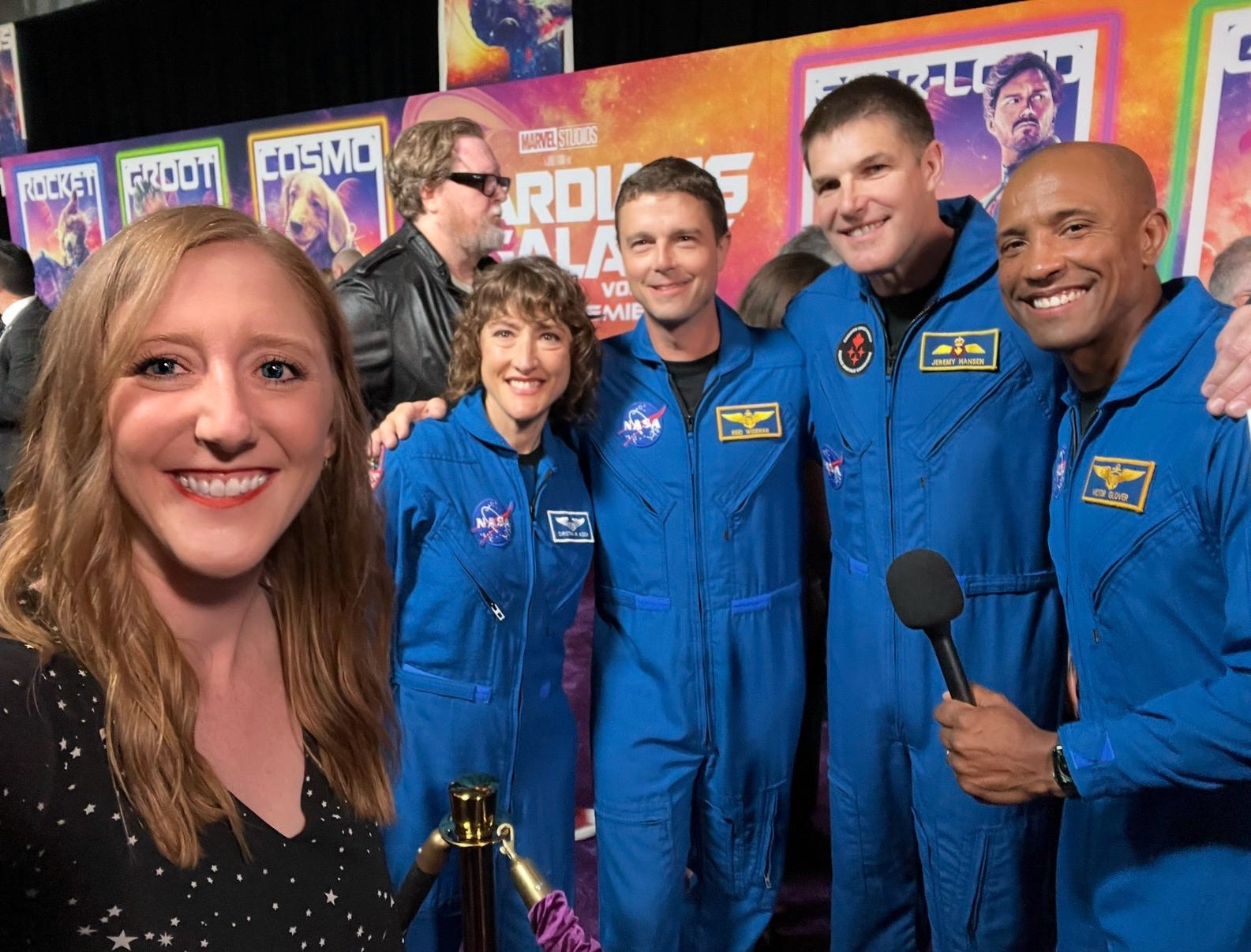
I was reminded of this by Emilee Richardson, who’s not only an Iowa native (from Clarinda, educated at Drake University) but also head of digital content and social media for NASA’s Jet Propulsion Laboratory (JPL) in Los Angeles. I reached out to her for input on this historic Artemis mission that has galvanized the world’s attention because I’ve long admired her dedication to public science education—her 4+ years at NASA and, before that, 14+ years at the Science Center of Iowa. She and her team coordinate across NASA to help keep us informed of ongoing exploration. But Artemis II—with humans at the wheel for a moon sequel everybody can quickly understand—has kicked things into higher gear.
“This moment is feeding all of us,” Emilee said of the Artemis frenzy. “It’s definitely needed right now.”

Keep in mind that Richardson and her colleagues deserve to relish this moment. They’ve endured more than their share of recent earthbound stress, from waves of federal workforce layoffs to the L.A. wildfires that tragically consumed the homes of a staggering 500 JPL employees.
As Richardson heard from one space fan regarding Artemis II: “It’s nice for once as a millennial to experience an unprecedented moment that’s positive.”
Artemis II follows a couple decades of the public feeling more humdrum about space missions that had become almost routine.
The first 1969 Apollo moon landing predates me, but scenes from that historic lunar stroll and the national pride surrounding it (stoked by the Cold War) are seared into nearly all our brains.
There was Voyager 1, the unmanned spacecraft launched in 1977 that has become the most distant earth object. This November, Voyager will reach 1 light day (16 billion miles) from earth. This durable spacecraft is carrying the sounds of Chuck Berry and Blind Willie Johnson beyond the outer reaches of our imagination. (Fun fact: Emilee used to be “the voice of Voyager” on Twitter/X.)
Since 2000, humans have continually lived in earth orbit and bridged national and cultural barriers aboard the International Space Station. How cool is that? We’ve established a permanent outpost beyond our atmosphere for a generation. That should still amaze us, not feel humdrum.
When you stop to consider it, Artemis II setting up NASA for a return to the surface of the moon as well as to Mars no longer seems that far-fetched or distant. Rovers Perseverance and Curiosity are still actively exploring Mars, awaiting their human colleagues.
“We’re not selling anything,” Emilee said of the online work by her and her team. “It’s about showing the world and American public what they’re getting for their investment in NASA.”
For my money, NASA has been a public investment I’ve never questioned. Like any modern media brand, NASA even has its own NASA+ streaming service—completely free!
History teaches us that humans continually disappoint ourselves as we wage wars and invent endless horrors.
But we also simultaneously surprise ourselves with our better angels when we work together and, in this case, reach for the literal stars.
“These astronauts are portraying the best of us—togetherness and humanity,” Emilee said.
Thank you, Artemis crew, for putting things into a broader perspective we’ve too easily forgotten over the last half century.
Iowa Writers’ Collaborative
I’m proud to be a member of the Iowa Writers’ Collaborative. Meet our writers here, or subscribe to our free weekly roundup and our Wednesday “Flipside” edition featuring sports, music, culture, and other topics.
Thanks, Kyle.