

Mike Rowley set forth along the highways and byways of Iowa in 1980 as a pharmaceutical rep—visiting doctors and drug stores in an era with no smartphones, just a paper road map folded inside his glove box.
“I knew where every drive-up telephone was in every town in the state,” he said.
Rowley peddled medicine such as amoxicillin, which soon became the nation’s No. 1 antibiotic—at a modest 8 cents per dose. TV in the ‘80s wasn’t blanketed with millions of dollars in pharma ads—people dancing in the streets to celebrate GLP-1 drugs while a narrator speed-reads through dense paragraphs of side effects.
Rowley crisscrossed Iowa in his Monte Carlo, racking up about 70,000 miles a year and a couple million over his 36-year career. Now a decade into retirement at 68 and living in Clive, he admits he no longer remembers whether he once knew a Dr. Armstrong in Bode, Iowa, or a Dr. Bode in Armstrong, Iowa.
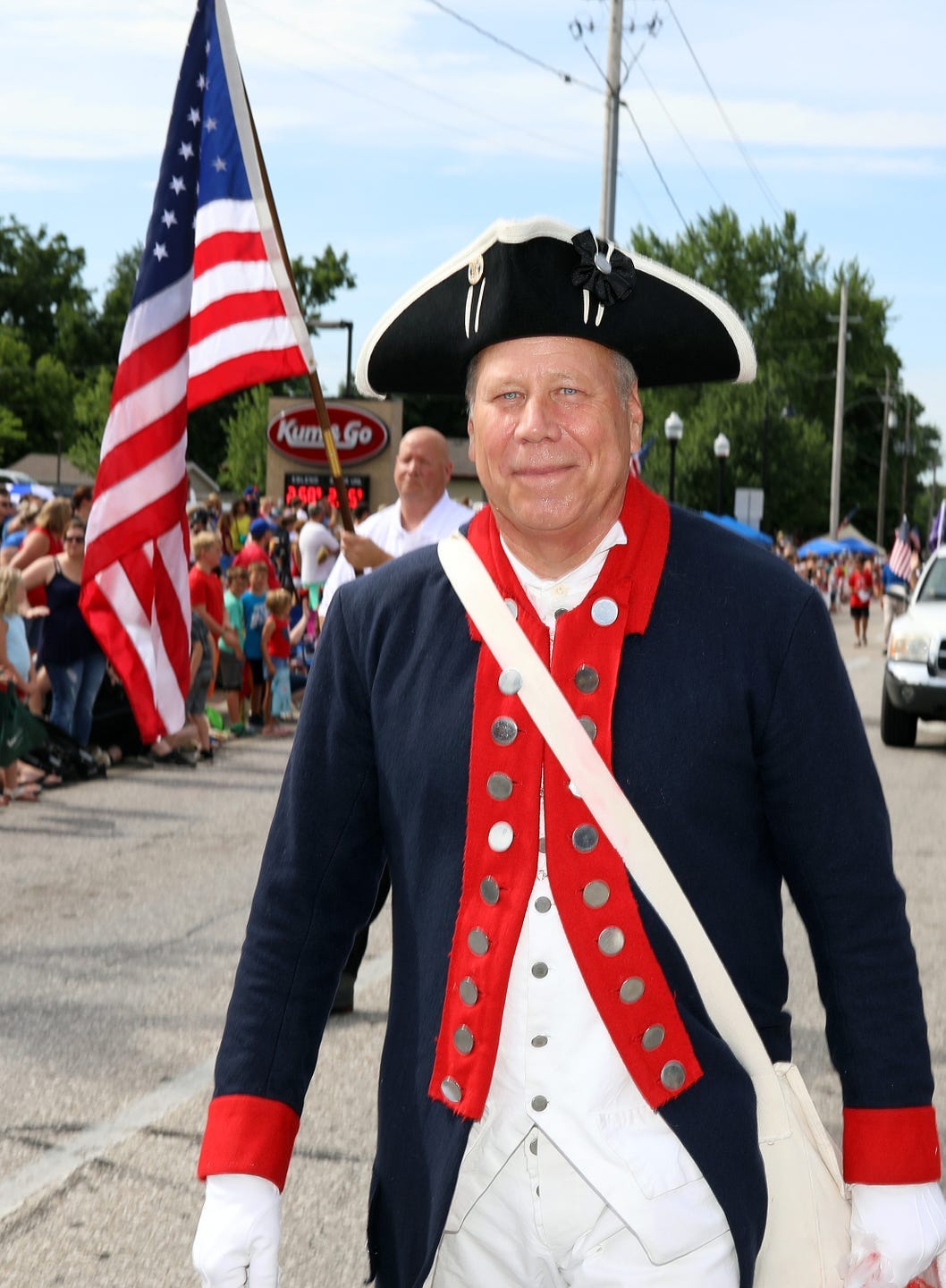
Rowley, who describes himself as “probably one of the only non-politicians who’s been in every Iowa county 100 times or more,” has also gotten involved in this year’s America 250 celebration in Iowa. He’s a genealogy enthusiast and member of the Sons of Union Veterans of the Civil War.
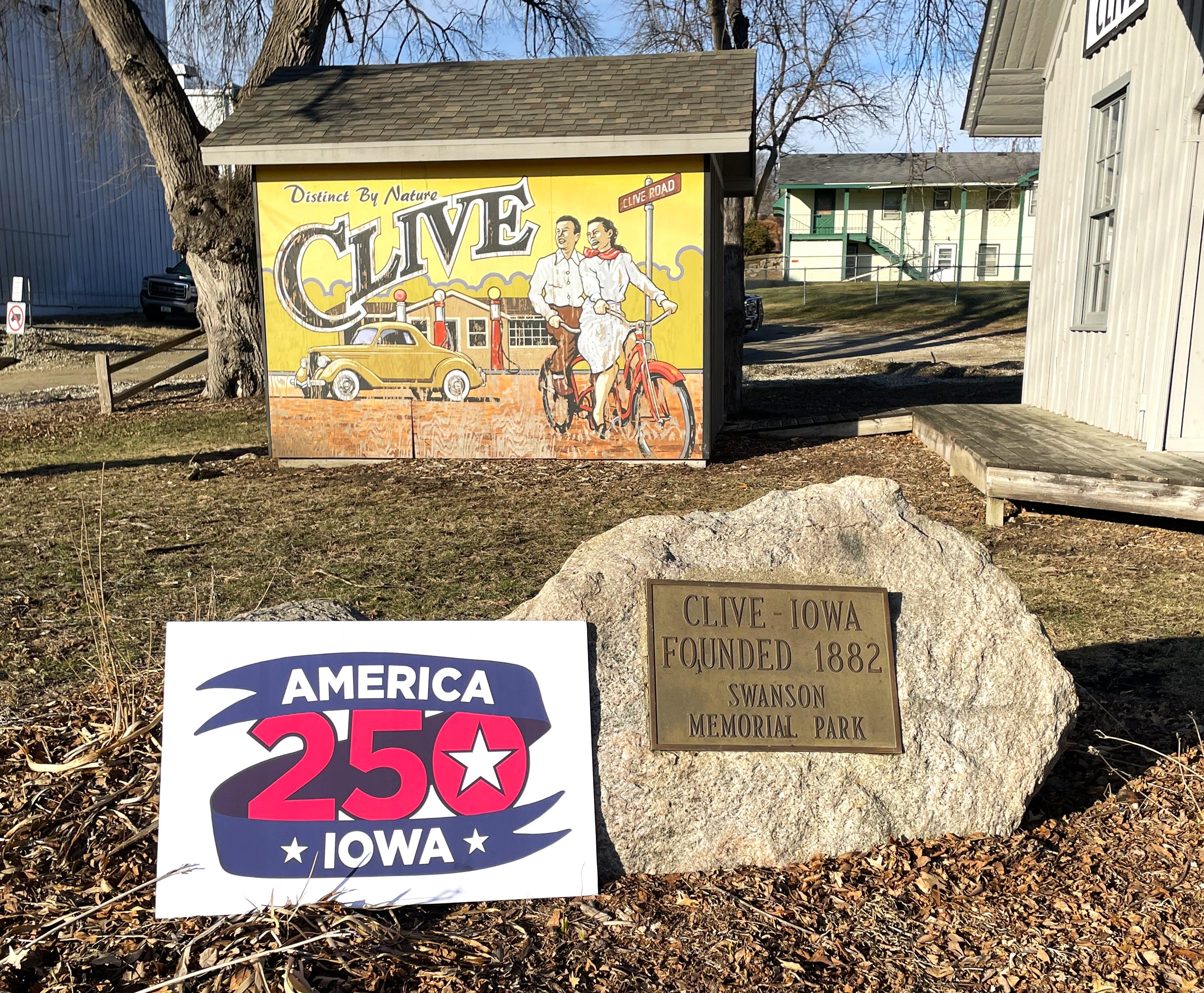
His brainstorm of public patriotism: The “All Iowa Towns Collage.”
It’s exactly what it sounds like: Since the first week of January, Rowley and his fellow volunteers have been crowdsourcing at least one photo from each city in Iowa, to be assembled into a mosaic snapshot of our state in this semiquincentennial year. The team has already gathered more than 600 photos. (Rowley consulted the Iowa League of Cities for the official tally of 944 incorporated cities, but his current spreadsheet lists at least 957. “If they’ve got a town they want to claim,” he said, “we’ll count it.”)
Rowley wanted a project that would “cover every inch of Iowa,” welcome everybody, and cost nothing.
“I guess I’m always looking for ways to get people involved and show people they can do something,” he said.
He’s working with tech-savvy fellow volunteers to piece together the mosaic for online display and print. He envisions a handheld version in which each individual photo is no more than 1 inch in diameter. But he also wants a much larger canvas on display at county fairs and the Iowa State Fair.
Adair County is covered—Fontanelle, Greenfield, Orient. So is Adams—Corning, Nodaway, Prescott. But four cities remain in Allamakee: Harpers Ferry, New Albin, Waterville, and Waukon.
Rowley credits seven couples in their 80s with contributing photos from nearly 250 cities, blanketing much of northwest Iowa.
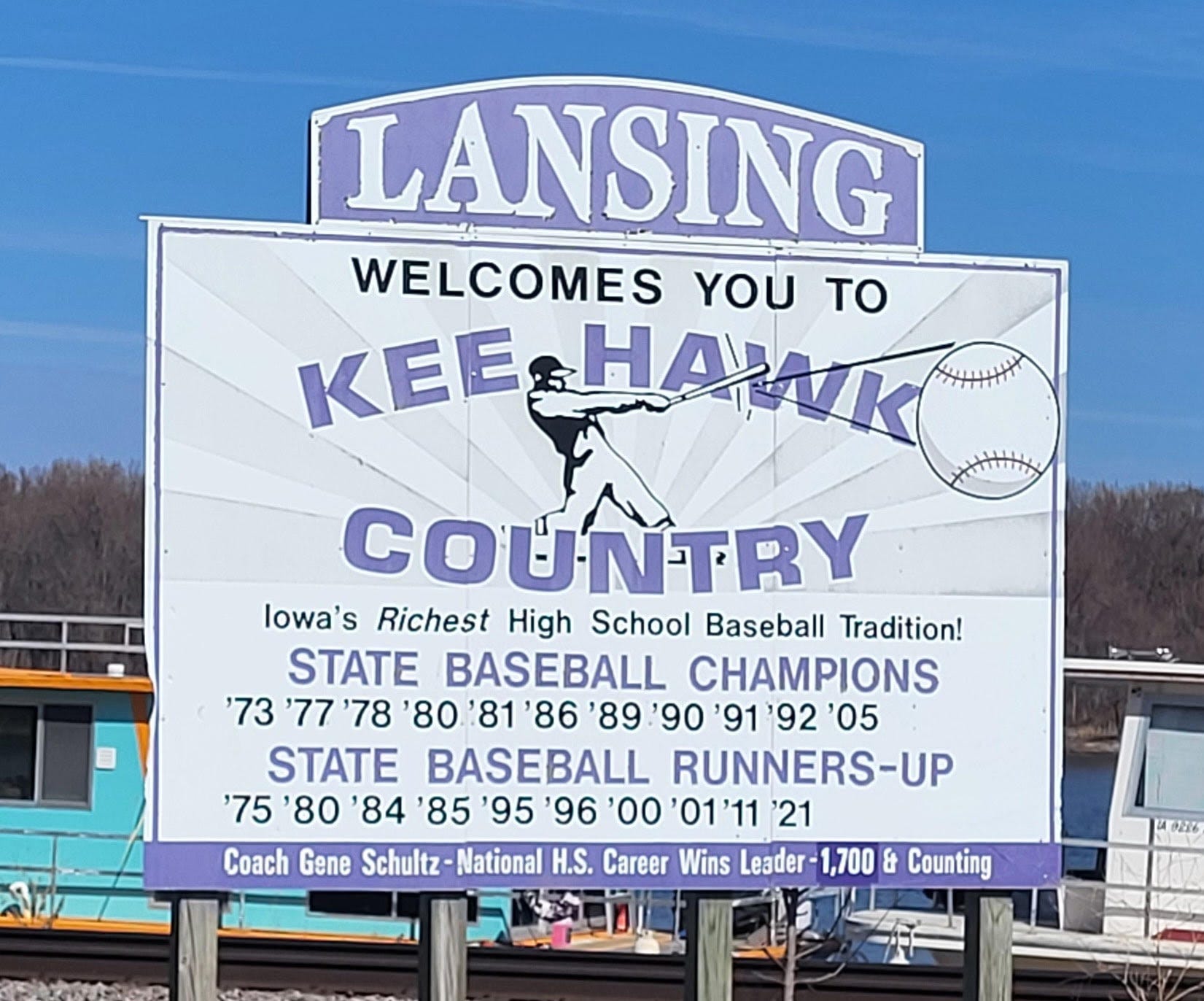
As you might guess, many of the submissions feature town welcome signs or landmarks such as water towers. The image from Lansing memorializes longtime resident Gene Schultz, who died last month at 79 as the nation’s winningest high school baseball coach. Schultz’s 45-year career at Kee High School produced 1,754 wins—and 11 state championships—before he retired in 2014.
Rowley has been retired for a decade—all the better to nurture his genealogy interests and volunteer with the Union veterans group.
So what does he make of piecing together his homespun patriotic celebration given the constant partisan shouting match of our digital media thunder dome?
“I know people find politics in everything,” Rowley said. “Hopefully, maybe, this is the one thing there’s no politics in.”
America 250, he elaborated, “really isn’t just a celebration of the Founding Fathers, Boston, Philadelphia and all that, it’s really everything that has happened since our first birthday.”
It’s hard not to agree with his project’s ultimate value proposition: “What makes us strong are our communities.”
How we coexist with one another in the real world has become only more important as social media strains neighborhood ties and AI challenges our very humanity.
Rowley is also helping with a national project to encourage everybody to read the Declaration of Independence on July 8, 250 years after its first public reading.
In Iowa, he’s intent on honoring the burial sites of 76 veterans—dating to the Revolutionary War—who still languish in unmarked graves.
“I have four tombstones in my garage right now,” he said.
How to send photos to the All Iowa Towns Collage
If you would like to contribute to the All Iowa Towns Collage, email your photos to Rowley at mjr1825@gmail.com. The deadline is March 31.
Another ‘Ken Burns effect’: The comfort of history’s horrors
Speaking of America 250, my favorite podcast episode of the past month is probably Chuck Todd’s conversation with documentary filmmaker Ken Burns. As a lifelong Burns fan, I’ve heard him give countless interviews, along with a couple of speeches in person.
When current events feel volatile and unprecedented, there’s something oddly reassuring about being reminded of all the horrors, disruption, and eternal human foibles we’ve somehow managed to forget.
Maybe I have a warped sense of what qualifies as comfort. But here are three reasons I appreciated Burns’ latest interview while we monitor multiple wars raging:
1. History gives us perspective by puncturing the myth that our politics are uniquely broken.
“We were way more divided during our Revolution, way more divided obviously during our Civil War, way more divided during the Depression, way more divided during the Vietnam years. … We tend to think, as kind of narcissist Chicken Littles, that our time is the worst.”
2. The most dangerous political trick is the invention of false enemies—“them.”
One of Burns’s clearest moral arguments is that political bad actors gain power by interposing enemies between people and their real interests.
“There’s only us, there’s no them. And whenever anyone tells you there’s them, you’re having the wool pulled over your eyes.”
3. You cannot responsibly record history—a step beyond journalists reporting current events—until time and scholarship have done their work.
Burns says he generally needs 25 to 30 years before he feels a subject can be treated historically, not just journalistically. Distance allows “triangulation.” You are no longer captive to immediate emotion, incomplete evidence, or partisan framing.
For instance, Burns has already interviewed former President Obama in eight two-hour sessions, with two more to go. Don’t expect to see the results anytime soon.
Want to join the IWC hootenanny?
Paid subscribers of any members of the Iowa Writers’ Collaborative are invited to attend two nights of music in April as part of our IWC Storm Lake Retreat.
April 23: The Weary Ramblers will perform in the Mermaid Room of the Cobblestone Ballroom in Storm Lake.
April 24: The Inaugural IWC Hootenanny takes place at the legendary Byron’s in Pomeroy.
Please use the links to RSVP to either or both events.
I’m 99% sure I won’t be able to attend, but I know you’d have fun with the musicians and other collaborative members.
Iowa Writers’ Collaborative
I’m proud to be a member of the Iowa Writers’ Collaborative. Meet our writers here, or subscribe to our free weekly roundup and our Wednesday “Flipside” edition featuring sports, music, culture, and other topics.