

In the autumn of 1992, I stood inside Prinsengracht 263-267 in the center of Amsterdam, the address you probably know as the secret annex where Anne Frank and her family hid from the Nazis during World War II.
The power of a diary drew me there.
Frank, a 15-year-old victim of the Holocaust who died in 1945 in the Bergen-Belsen concentration camp, wrote what arguably became the most famous diary in the Western world.
In the summer of 2018, my family and I walked the 1.7-mile loop around Walden Pond near Concord, Massachusetts.
The power of a diary drew me there.
The setting was made famous by Henry David Thoreau and his 1854 book, “Walden,” a classic of transcendentalist literature that chronicled his time “living deliberately” in a cabin near the lakeshore.
This spring, I sat at home in Des Moines in my sunporch office, a living room chair, the sofa in the TV room, or bed with the new book “Our Diaries, Ourselves.”
The power of not just one diary but the vast historical sweep of diarists rooted me there.
This has never happened to me before as a reader: I first experienced this book in the very same space where it was born.
Its author, Betsy Rubiner, is a journalist now based in Chicago. But for 26 years she and her family lived at what is now my address in Des Moines. We also worked together at The Des Moines Register.
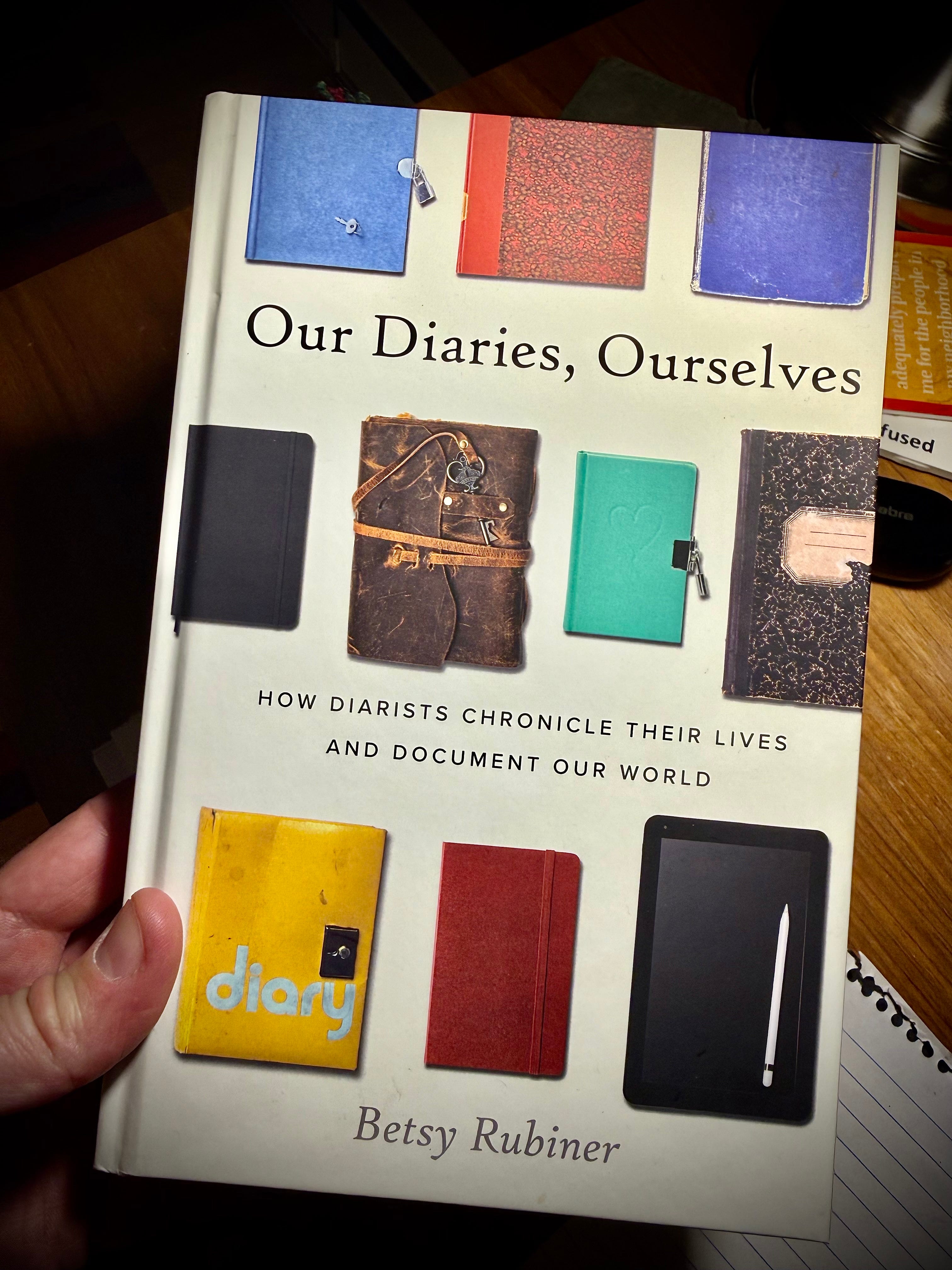
She’s a lifelong diarist — 82 volumes and still going strong. The project that began in Des Moines gave her a chance to turn private journaling into a public, reported exploration of diaries, traveling the globe and discovering “a whole world I didn’t know about.”
The title echoes ‘Our Bodies, Ourselves,” an influential women’s health and sexuality book first published in 1970 that grew into a nonprofit now housed within Suffolk University in Massachusetts, distributing information worldwide in 34 languages.
Early in the book, Betsy chronicles how diary culture in the 19th and 20th centuries became increasingly defined by women, offering “a space to rebel against negative or limiting stereotypes.”
“The book itself didn’t feature my diary writing as much as I thought it might,” she told me.
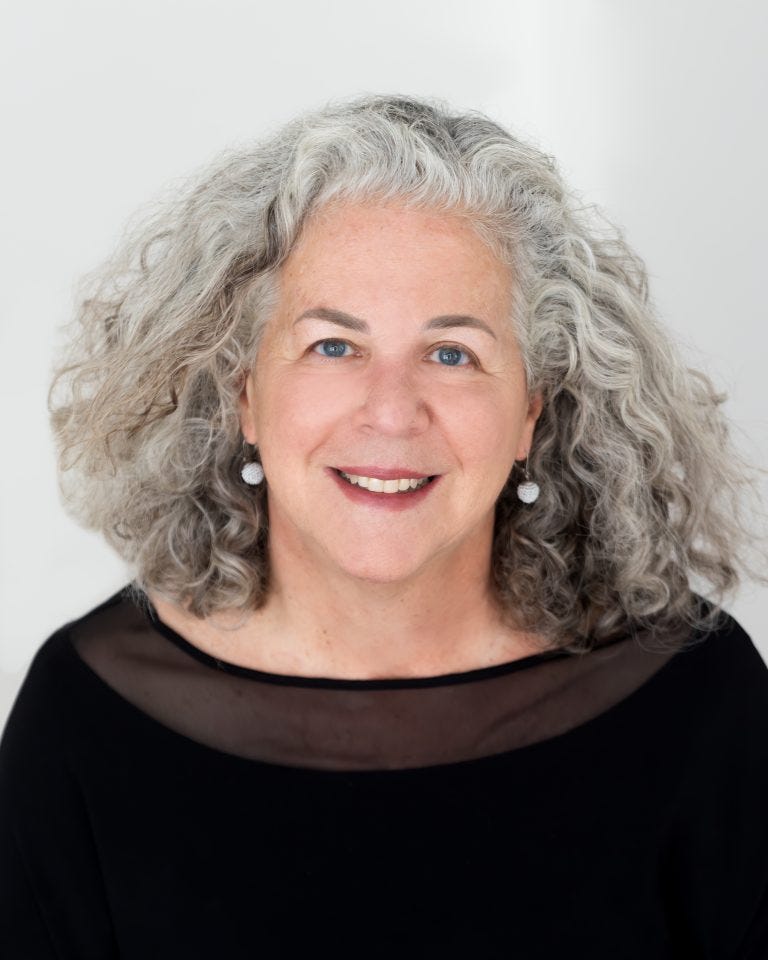
Instead, Betsy strikes an elegant balance between her own entries — divulging childhood thoughts or offering a glimpse of her late mother’s dementia — and reported work: interviews with dozens of people, plus far-flung travels to archives and diary events, all documented by 40 pages of notes in the back of the book.
‘The freedom to write whatever the hell I want’
I’ve never kept a diary, except for a brief travel journal years ago when I lived in London and roamed Europe. Reading Betsy’s work made me wonder what I’m missing by not writing it down in my own daily ritual of self-reflection.
She writes at night as a “kind of release,” she said. Although she’s a journalist by training, she’s careful not to let her diary stray into journalism. She doesn’t want it to be that intentional.
Her diaries are personal, fleeting impressions. Her book on diaries is the carefully edited journalism.
About halfway through the book she explains what has fueled her lifetime practice: “In my diary, I can be uncertain, unclear, sloppy, foul-mouthed, inaccurate, and, yes, biased. Diary writing offers a mental break from my day job and the freedom to write whatever the hell I want and to not care if my diary is successful. Diary writing is a creative act and and an art, letting me explore ways of writing, thinking, and being. It feeds my soul.”
Not that a definitive definition for the diary really exists.
“It’s hard to make broad generalizations about diaries,” Betsy said, especially today, when “the analog world and digital world are kind of informing each other.”
After all, every iPhone now comes with its own Journal app installed. A diary can be online. It doesn’t have to be a book of handwritten scribbles tucked away in a drawer, seen by only one pair of eyes.
But at its core it’s still focused on the writer as the audience. There’s no algorithm to game.
Betsy pins her diary definition on two words: dailiness and self. In other words, this is writing with rigor and ritual — a “conversation with the self” that lives in the moment.
A diary’s blurry line between private and public
And yet — as the book makes plain — diaries don’t stay in the moment forever. A notebook can feel private while you’re writing it, then evolve into something else: evidence, literature, family history, archive. Living inside that tension between self-talk and possible future readers is something Betsy is still working out in real time.
Anne Frank’s diary is a great example of how complicated that line can be. Although initially published in 1947 in the Netherlands and then France, the book didn’t appear in the United States until 1950. A young editorial assistant, Judith Jones, rescued it from a slush pile and championed its publication.
The diary continued to unfold through the decades with expanded versions, because Anne herself self-consciously revised portions of her diary, and her father made his own edits.
That diarist line — between private and public, between self-dialogue and performance — is blurry at best.
This is true for Betsy, too. Her daily routine is more complicated now that she knows she’s donating her 82+ volumes to the Iowa Women’s Archives at the University of Iowa.
Should she mention somebody by name? Use initials only? Avoid a certain scene or topic altogether?
“Ultimately, I do, to some extent, feel someone looking over my shoulder,” she said.
Maybe that’s the real power of diaries that pulled me to Amsterdam and Walden, and kept me turning the pages of “Our Diaries, Ourselves” in my own home. A diary begins as a place to tell the truth to yourself, in whatever voice you can manage that day. But there’s the chance it outlives you, with or without edits, and becomes a way for strangers to meet you across time and say: I was here, too.
May 2026 ‘Our Diaries, Ourselves’ book tour through Iowa
Betsy’s book tour stops in Iowa City: 7 p.m. Friday, May 1 at Prairie Lights Books.
She also appears at the Des Moines Book Festival: 12:30 p.m. Saturday, May 2 in Room 148 at the Franklin Event Center.
Also at the Book Fest: Many of the Iowa Writers’ Collaborative creators are involved in the festival, including a panel discussion featuring the collaborative at 3 p.m. Saturday, May 2 in Room 148.
Iowa Writers’ Collaborative
I’m proud to be a member of the Iowa Writers’ Collaborative. Meet our writers here, or subscribe to our free weekly roundup and our Wednesday “Flipside” edition featuring sports, music, culture, and other topics.
What a beautiful essay Kyle.